Local 432 - Champaign, IL

Exclusive Representation Of Trainmen And Equal Representation Of Locomotive Engineers.


SAFETY ALERT!:............ UTU MEMBERS!: PLEASE COMPLETE THIS SURVEY ON RAIL SAFETY. - 9/28/2009
Members: Complete this survey on rail safety
The UTU Rail Safety Task Force explained the value of documentation in its Safety Alert #4. (See link at the bottom of this article that will take you directly to Safety Alert #4.)


Now, to document some of the issues the UTU Rail Safety Task Force believes contribute to the loss of situational awareness, injuries and fatalities, the task force requests that you complete a short survey.

There are no right or wrong answers, just honest and true answers.

Your responses will assist the task force to better understand your problems and form a consensus to present to carrier officers -- or regulators and lawmakers, if necessary -- to help make your workplace as safe as it can be.

The results will be tabulated electronically and anonymously.

To take the short survey, click here.

To read Safety Alert# 4, click here.

In solidarity,

UTU Rail Safety Task Force

Greg Hynes, UTU assistant Arizona state legislative director
Steve Evans, UTU Arkansas state legislative director
Jerry Gibson, UTU Michigan state legislative director
Scott Olson, UTU Arizona state legislative director

September 25, 2009
>>>
We'll Fight With Fire In Belly For What's Right! By UTU International President Mike Futhey - 9/24/2009

We accept that managing employees isn't a popularity contest. But it need not be an unpopularity contest.

I share with each of you the concern over ratcheted-up harassment, intimidation and excessive discipline. There is no more economic sense to make out of this than there is common sense.

I was recently told of an incident where an experienced conductor’s work was interrupted no fewer than 18 times over a six-hour period to quiz him on operating rules. Such unjustifiable scrutiny contributes to an unsafe workplace, as the results are used to punish rather than to educate.

When employees in safety-sensitive positions are put in a position where their primary focus at work is defending themselves, their ability to do their jobs efficiently and safely is jeopardized. That is not in the offending carrier’s best interest, certainly not in the customers' best interest, and absolutely not in the best interests of operating efficiently and safely.

We are putting a coalition together with other labor organizations to stop this unwarranted activity. First, we want to hear from you. On the UTU’s home page, at www.utu.org, there is a link to contact information for each of the International's senior officers.

Please, tell us the problems, with examples and details. Help us to teach the carriers we are going to represent our members and are not going to be silent while our members continue to be harassed, intimidated and excessively disciplined to the point of putting their limbs and lives in jeopardy. These members cannot focus on doing their jobs efficiently and safely.

No member should constantly have to look over their shoulder.

As the carriers' attempt at tortured interpretations and applications of our agreements, we will fight them in the courts in Fort Worth, we will fight them on the properties from Jacksonville to Norfolk to Omaha, and we will not go quietly into the night. We will stand and fight.

Our message to the carriers is simple: We want our members properly trained, and then we expect the carries to leave us alone and let us do our work efficiently and safely.

On behalf of our members, we will -- in the words of former President Al Chesser -- "stand and fight with fire in the belly for what is right."

September 23, 2009
>>>
FRA's Joe Szabo Interview With Railway Age Magazine. - 8/5/2009
(The following on-the-record interview with FRA Administrator Joe Szabo appears in the July issue of Railway Age magazine. Szabo previously was UTU Illinois state legislative director.)

WASHINGTON -- Federal Railroad Administrator Joseph C. Szabo, a fifth-generation railroader, has been in the industry since age 18.

The former United Transportation Union Illinois State Legislative Director hired out on the Illinois Central in 1976 at his father’s suggestion to make money for college. He worked mostly as a conductor in Chicago commuter service, but spent some time in yard and over-the-road freight service.

His father, Joseph F. Szabo, was a switchman with the IC, and a UTU officer for 15 years as secretary-treasurer of Local 1299. In 1987, when the IC sold its commuter operation to Metra, the younger Szabo chose Metra. "I enjoyed the breaks working freight, but I preferred being with people and having reasonable control over my working hours."

RAILWAY AGE: Tell me about your union involvement.

JOE SZABO: When I was 14 and 15, I helped my father keep the books for UTU Local 1299. I was paying a lot of attention to what was going on in the union at that time. I signed on with the Illinois Central in 1976 and joined UTU Local 1290; I attended college part time. In 1984, the secretary-treasurer of Local 1290 retired, and some of the old heads said I should run for the job. I did and won. I had been involved in local politics in my home town of Riverdale, Ill., on the zoning board of appeals, and my parents were always involved in civic affairs -- a core value for me. In 1989, I ran for local legislative representative and was elected. The rest, as they say, is history.

RA: You bring practical railroad experience to the job. What does that mean for your perspective, how you run things?

JS: I would like to think that my life experiences would add a degree of credence to the position, and hopefully bring important insight to the FRA, not only having the hands-on experience, but the daily interaction with railroad employees, even as a union officer. I really do understand what happens out there.

RA: All the activity occurring in the rail industry -- high speed, PTC, ECP brakes, etc. -- what does it mean for the FRA, and for you?

JS: It’s incredibly exciting. There couldn't be a more exciting or challenging time taking over this agency, because it is a transformational period for the agency, as well as for the industry, and for the country. Inside the FRA, we've been mandated with more than a dozen rulemakings as part of the Rail Safety Improvement Act. That in itself would be a huge undertaking, if that was the only item on our agenda. But it's not. We’ve been handed a high-priority, high-profile project by the White House.

The president has said he wants to change the way Americans travel, and that passenger rail is going to be an integral part of that transformation, of balancing our transportation network. Hallelujah! It’s been so long overdue, and something that I believe has been simmering with the population, but hasn’t resonated with our political leadership. Now it has.

So, as an agency, we’ve been charged with executing the president’s vision, and with ensuring that he is successful with it. That's a culture change for America. Inside the FRA, it's a major change, because historically, this has been predominantly a safety agency. Statutorily, safety is the primary mission of the FRA.

Out of our 850 employees, about two-thirds are dedicated to the safety program, a good program that runs like a fine-tuned machine. But we’ve got this small, dedicated passenger rail section that suddenly has been thrown into the spotlight, given this presidential mandate --short timeline, failure is not an option.

So it's created tremendous stress for us. We’ve got to go through this transformation in our passenger rail section, beef up our resources, do additional hiring, and continue to grow the expertise to make sure we have the appropriate people on board to expeditiously review and approve the grant applications that are going to be coming in. We cannot fail, and one of the things that will lead to failure would be a lethargically slow process that frustrates the states.

RA: That’s one criticism that's been leveled in recent years -- that it takes the FRA too long to get anything done, whether it’s a RRIF loan approved or a rulemaking on a particular technology.

JS: There’s no question that criticism has been out there. One of the unfortunate parts of government is that, by nature, bureaucratic processes are slow. So, as we’ve been putting together our guidance for the passenger rail program, we’ve been looking at how we can break down many of those barriers. While balancing the need to ensure that risk is reduced and that projects are approved on a merit basis, we need to be as expeditious as possible. So we’re aware of the criticism and clearly trying to address it.

RA: The industry is still trying to get its arms around high speed. What are we talking about -- 200 mph dedicated lines, or 110-125 mph trains on existing freight rights-of-way?

JS: All of the above. Frankly, in my opinion, too much of the debate has been about speed, which is only a means to an end. That end, the important criteria, is reducing trip times. That's the only thing that matters -- making sure that trip times are competitive with or superior to other modes of travel, that they offer the level of convenience that the traveling public is looking for.

Equally important is reliability. To me, this whole debate has to be about trip times and reliability. Speed happens to be one tool that helps us achieve those goals. Yes, we are looking for 200 mph dedicated systems, but that doesn't mean that there also isn’t a very important role for 110-125 mph service.

I’ll give you an analogy. We've got a road system consisting of local streets, county and state and U.S. highways, and interstates. All interconnect with each other and are part of a comprehensive system. The same approach has to be taken with passenger rail, whether we're talking about commuter services, conventional 79 mph, emerging corridors with 110-125 mph services, or 200-mph high speed.

RA: Another criticism that’s been leveled at government is that there's no comprehensive transportation policy.

JS: I hope that becomes a part of the SAFETEA-LU reauthorization process. At FRA, we're willing to be helpful in that process -- that government does start viewing transportation from a broader perspective, rather than the traditional silos, regardless of whether we're talking about transporting goods or people.

RA: Positive Train Control: Freight railroads are understandably concerned about the cost and the 2015 implementation deadline, who will pay for installation and how much. Your thoughts?

JS: We’re working on the Subpart I rulemaking and are making sure that we get out information in a timely manner. In a broader sense, the industry has an opportunity here to change the dynamics, the relationships, particularly between Amtrak and the freight railroads. There's now money on the table to improve passenger operations. I think PTC presents some good opportunities for a win-win for freight and passenger.

RA: What can you tell me about FRA's R&D initiatives? Will more funding be available?

JS: This agency supports and will attempt to advance through our R&D department those technologies that improve the safety and efficiency of the industry. We clearly have an Administration that understands the role that rail freight and passenger can play in balancing our transportation network, and its advantages. So it’s my hope that, when it comes to our R&D side, there’s going to be support to allow us to continue to enhance rail's viability.

(The preceding interview with FRA Administrator Joe Szabo appears in the July issue of Railway Age magazine.)

July 31, 2009
>>>
CN's Outlook A Sign That The Economy Is Recovering. - 7/21/2009
TORONTO -- Canadian National Railway Co., Canada's largest railroad, reported improvements since May in moving products such as coal and grain, a sign the country's economy may be turning around, the Globe and Mail reported.

Montreal-based Canadian National, which reported quarterly earnings yesterday, said the gains show "momentum" building in the second half of the year, the newspaper said.

Increased shipments by some of Canadian National's customers could mean improvements for the broader economy, RBC Capital Markets analyst Walter Spracklin told the newspaper.

(The preceding article by Sean B. Pasternak was published July 21, 2009, by Bloomberg News.)


July 21, 2009
>>>
8 Ways To Go Home Safe! - 7/21/2009
Career-ending personal injuries and fatalities have continued to increase in the rail industry.


To educate members on the circumstances of these incidents, and in attempts to avoid them in the future, the UTU Rail Safety Task Force, appointed by International President Mike Futhey, urges that each of you continue to look out for each other and forward your ideas and concerns about workplace safety to them so they may address them. 

Interactive communication and "looking out for each other" is imperative to bringing us all home from work in one piece.

To ensure we all go home to our families in one piece, the UTU Rail Safety Task Force asks for a 100 percent commitment to rules compliance and to the following eight activities:

1) Job briefings: Ensure all crew members are present for job briefings, and focus on risk assessment.

2) Situational awareness: Constantly be aware of your surroundings and maintain situational awareness to avoid risks associated with the required tasks and work within the limits of your capabilities.

3) On/off standing equipment: Keep hands free of other objects and maintain three point contact, always being vigilant for equipment movement.

4) Avoid slips, trips and falls: Keep your eyes on the footpath and report any unsafe walking conditions to your local legislative representative for handling.

5) Radio communications: Always use proper identification, provide car counts when shoving, do not engage in excessive chatter or use "over and out."

6) Put safety first: Performing a task safety is more important than the time it takes to complete it. The only "good move" is one done 100 percent by the rules.

7) Ask questions: If any uncertainty arises, take the time to ask questions. Do not take risks or assume anything.

8) Be in charge of your own safety: Do not let others set YOUR level of safety. Report harassment and intimidation.

For more information on the UTU Rail Safety Task Force, and to communicate with the task force, visit the task force's interactive Web page by clicking:

www.utu.org/worksite/rail_safety_taskforce/safety_taskforce_home.htm

In solidarity,

UTU Rail Safety Task Force

Greg Hynes, UTU assistant Arizona state legislative director
Steve Evans, UTU Arkansas state legislative director
Jerry Gibson, UTU Michigan state legislative director
Scott Olson, UTU Arizona state legislative director

July 21, 2009
>>>

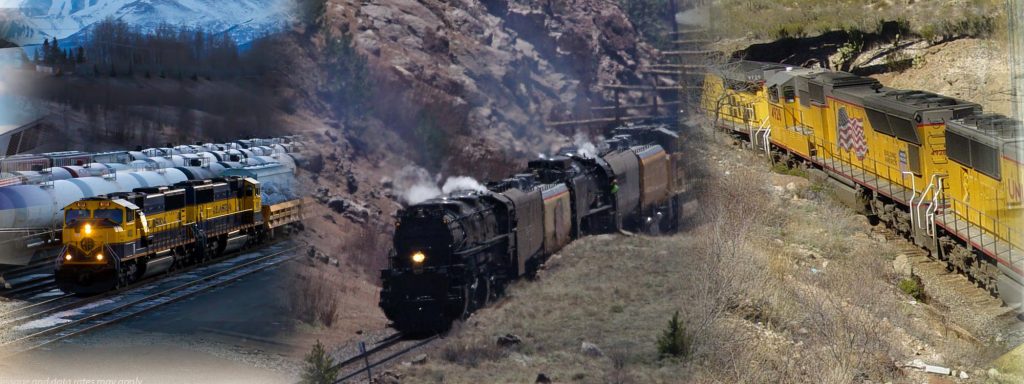
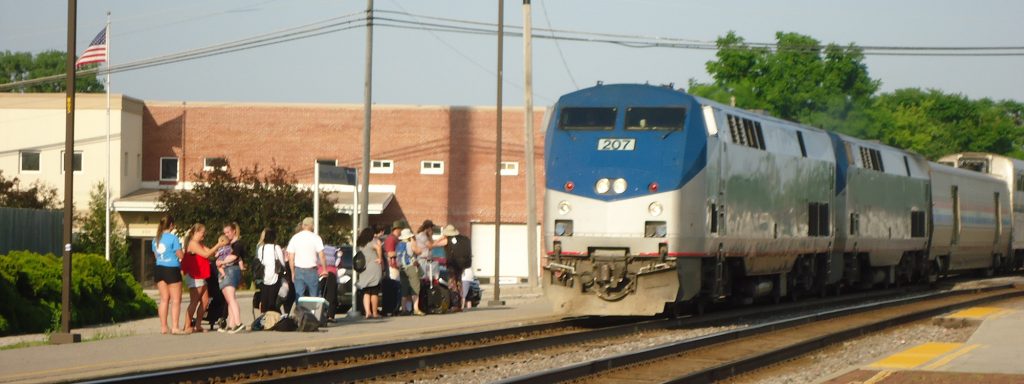
Welcome to the UTU Local 432 website.  Local 432 is based out of the Canadian National Railway Champaign, IL terminal.  UTU Local 432 consists of 44 conductors, engineers, and brakemen at this time.  The brothers of UTU 432 perform work on the CN main line from Champaign, IL to Markham, IL, and Champaign, IL to Fulton, KY.  Our brothers also get called to work the CN network between Decatur, IL, and Peoria, IL, and on occasion as far west as Springfield and Farmersville, IL.

Our 2009 officers are...

  • Jim Estay                   Local Chairman
  • Brian Sparrow           Assistant Local Chairman
  • Rodney Flessner       President
  • Open                        Vice-President
  • Rich Goben              Secretary
  • Monte Ireland           Treasurer
  • Grady Crippin          Legislative Representative
  • Open                       Alternate Legislative Rep.
  • Brian Sparrow          Delegate
  • Grady Crippin          Alternate Delegate
  • Charlie Davidson     Trustee
  • Ron McGuffin          Trustee
  • Jeremy Adkins         Trustee


LIVE  Weather Conditions Along The "Mainline Of Mid-America" At Milepost 132.